Atalaya: The Castle With No Blueprints
Atalaya is the castle behind the dunes at Huntington Beach State Park — a 30-room winter home designed from memory by Archer Huntington and built by Grand Strand workers during the Great Depression.
Category: guide | Published: 2026-11-03
Atalaya: The Castle With No Blueprints
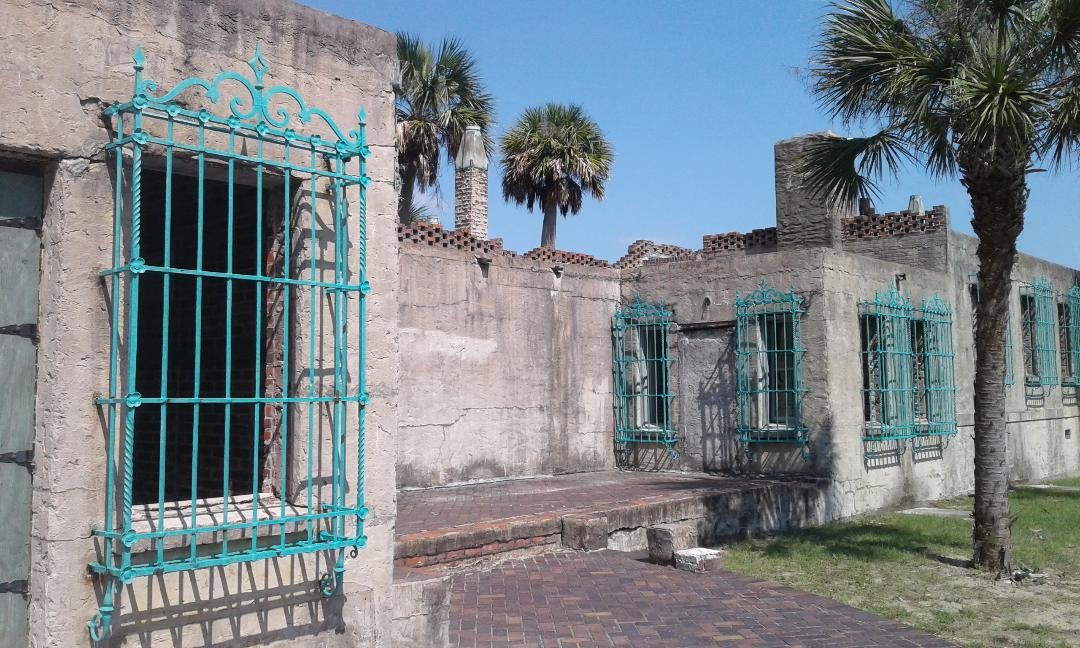
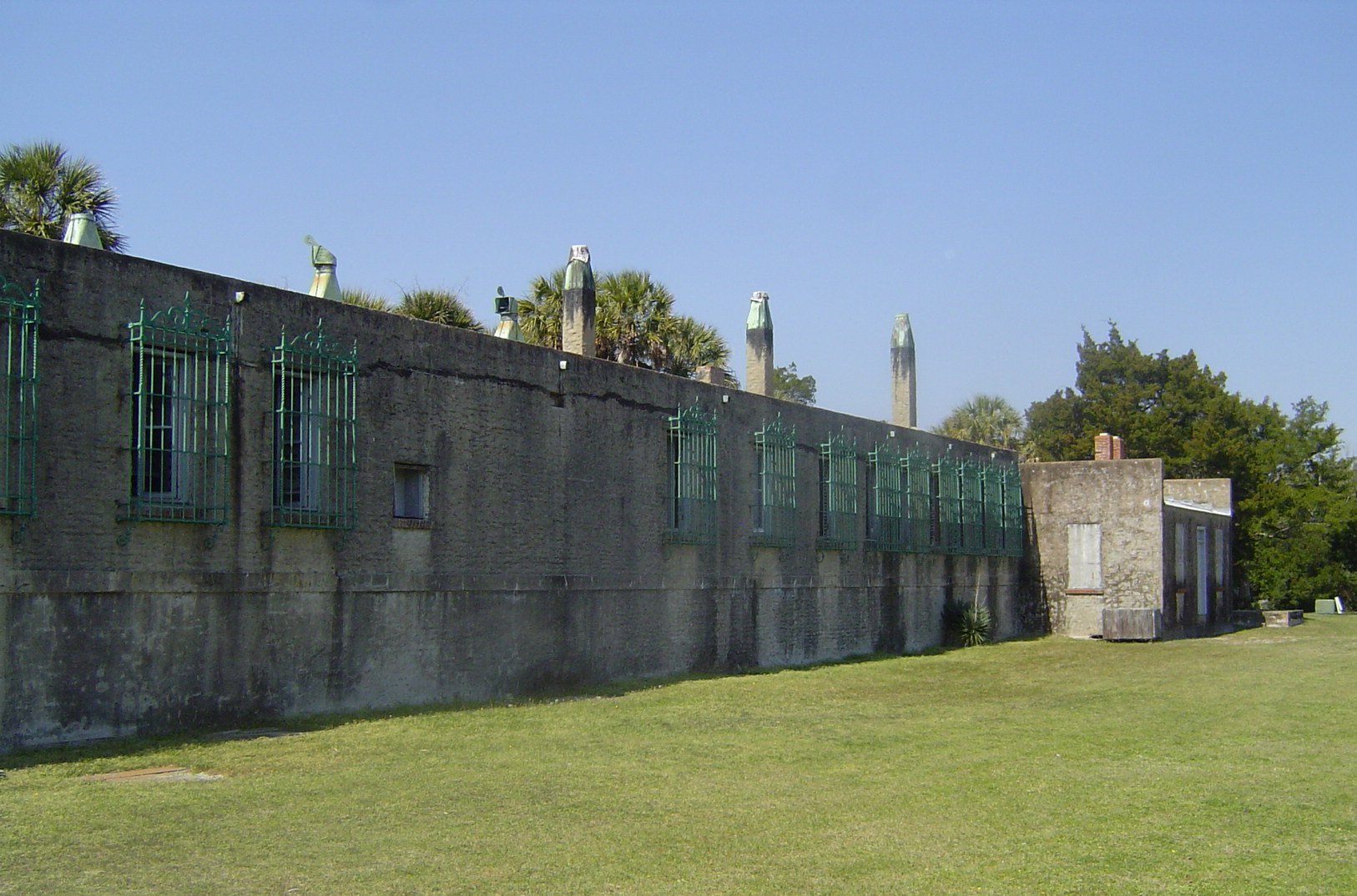
Photo: Colette Eshleman / Wikimedia Commons (CC BY-SA 4.0)
Down at the quiet end of Murrells Inlet, behind the dunes at Huntington Beach State Park, sits a castle. Not a pretend one built for putt-putt or pictures — a real masonry fortress, 200 feet square, with 30 rooms wrapped around a courtyard and a tower standing watch over the pines. It is called Atalaya (say it at-a-LIE-a), and everything about it starts with a strange fact: the man who designed it never drew a single blueprint. Archer Huntington carried the whole castle in his head, and a crew of Grand Strand working men built it straight out of his memory in the middle of the Great Depression.
Built from memory, by local hands
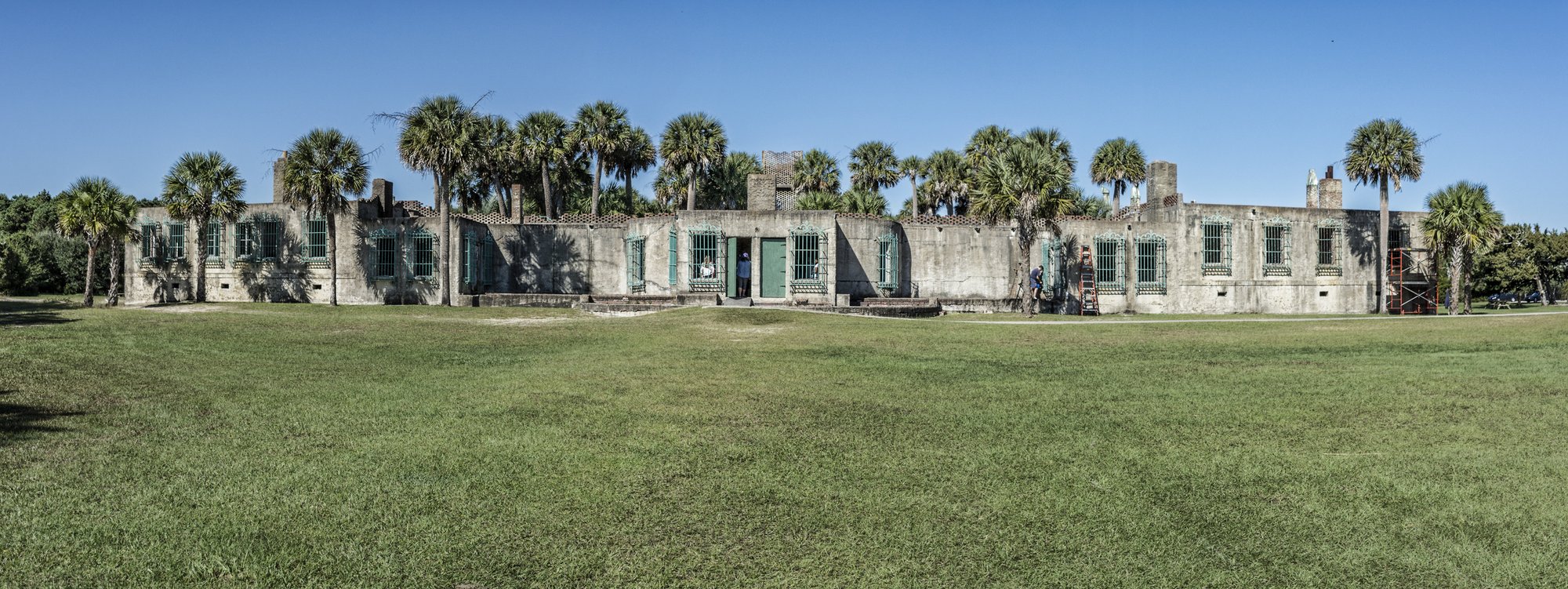
Photo: Ghorton56 / Wikimedia Commons (CC BY-SA 4.0)
Archer Milton Huntington was a railroad heir and one of the great Spanish scholars of his day. He founded the Hispanic Society of America, and he modeled Atalaya on the old Moorish coastal forts of Andalusia, Spain: thick masonry walls, arched loggias, and rooms opening onto a cool central courtyard. Construction ran from 1931 to 1933, and at Archer's insistence the labor was local. With the Depression squeezing the Grand Strand dry, he hired area craftsmen and working men — grandfathers and great-grandfathers of families still living up and down this coast — and put wages in their pockets building a castle by the sea.
Anna's castle, too
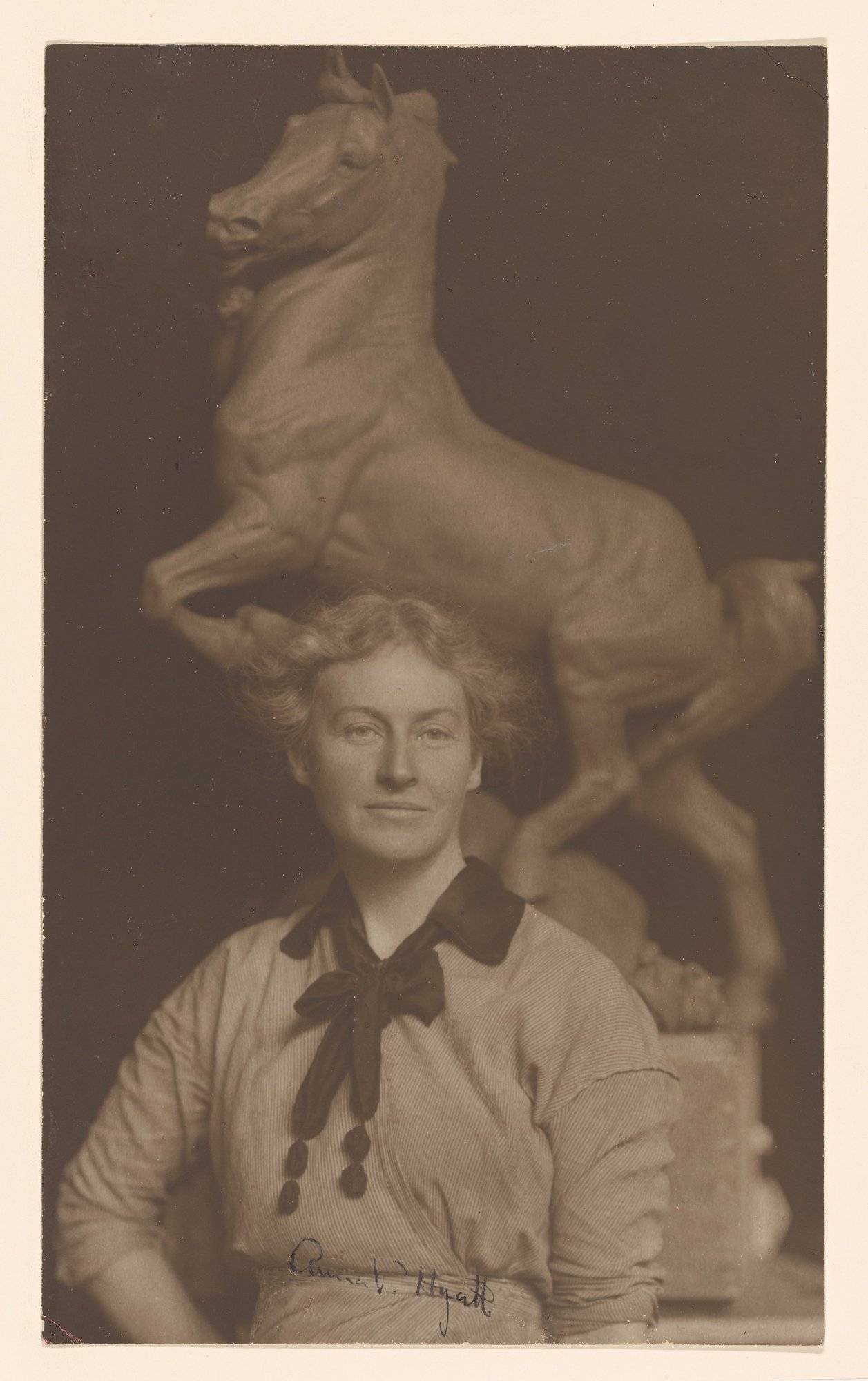
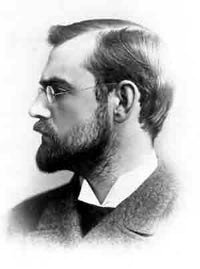
Anna and Archer Huntington — the sculptor and the scholar who built Atalaya.
Atalaya was a winter home, but it was also a working studio. Archer's wife, Anna Hyatt Huntington, was already one of the most famous sculptors in America when the castle rose. Her Joan of Arc had won honors at the Paris Salon in 1910, and when the monumental version was unveiled in New York City in 1915, it made history — the first public monument in the city created by a woman sculptor. Animals were her specialty, a gift she traced to her father, a Harvard zoologist. At Atalaya she worked in a studio lit by a 25-foot skylight, with pens nearby for the horses, dogs, and even bears that modeled for her. The castle's most famous feature is hers: the turquoise iron grilles over the windows, designed by Anna herself, are as practical as they are beautiful — they double as hurricane armor. Anna had come south in part to recover from tuberculosis, and the sea air, the quiet, and the work seemed to suit her; she lived to 97.
A garden across the highway
While the castle went up on the ocean side, the Huntingtons were building something just as lasting across US-17: Brookgreen Gardens, founded in 1931 as a place to show Anna's sculpture outdoors. It grew into the largest collection of figurative sculpture by American artists in an outdoor setting anywhere in the world, with a great many of the pieces sculpted by Anna herself. Castle and garden were one idea in two halves — a home for the artists on one side of the highway, and a home for the art on the other.
The watchtower
"Atalaya" is Spanish for watchtower, and the castle keeps one. The tower rises nearly 40 feet, and it had a job beyond watching the water: hidden inside it sat a 3,000-gallon water tank that fed the house below. The Huntingtons' story at Atalaya wound down with the war years — they turned the castle over to the Army Air Corps from 1942 to 1946 and last wintered there in 1947. In 1960 the land was leased to the state, and Huntington Beach State Park was born. Atalaya joined the National Register of Historic Places in 1984, and the grounds became part of a National Historic Landmark District in 1992.
Every fall, the art comes back
Each late September, Atalaya fills with artists again for the Atalaya Arts & Crafts Festival, a juried show of more than 100 artists that has been running since 1975. The festival began as a tribute to Anna — a way to fill her castle with art again — and it still feels like that: easels and pottery wheels in rooms where she once worked in clay and bronze. South Carolina State Parks lists the next edition starting September 24, 2027.
Visiting Atalaya today
Atalaya is open daily, 9 AM to 4 PM (until 5 PM during daylight saving time). Huntington Beach State Park admission is $8 for adults, $5 for South Carolina seniors, and $4 for ages 6–15, with ages 5 and under free; Atalaya itself is $2 per person for ages 6 and up. Visitors can walk it self-guided or join a docent-led tour with the Friends of Huntington Beach State Park, who also run the Atalaya Visitor Center. The castle sometimes closes for large events and weddings, so it is worth a call before a special trip: the park is at 16148 Ocean Hwy, Murrells Inlet, (843) 237-4440.
Plenty of Grand Strand families have an Atalaya story — a grandfather who swung a hammer out there in the thirties, a first date under the arches, a school trip that never left the memory. And more than a few folks will tell you, straight-faced, that Anna still walks her courtyard on quiet nights — believe that or not, as you please. If your family has an Atalaya story, MBU wants to hear it. And if you have never walked through that courtyard and looked up at the tower, what are you waiting on?