Myrtle Beach vs. The Outer Banks: Which Beach Wins Your Vacation?
MBU stacks Myrtle Beach against the Outer Banks on cost, beaches, golf, parking, and the drive — honest pros and cons both ways. Team Myrtle or Team OBX?
Category: guide | Published: 2026-11-09
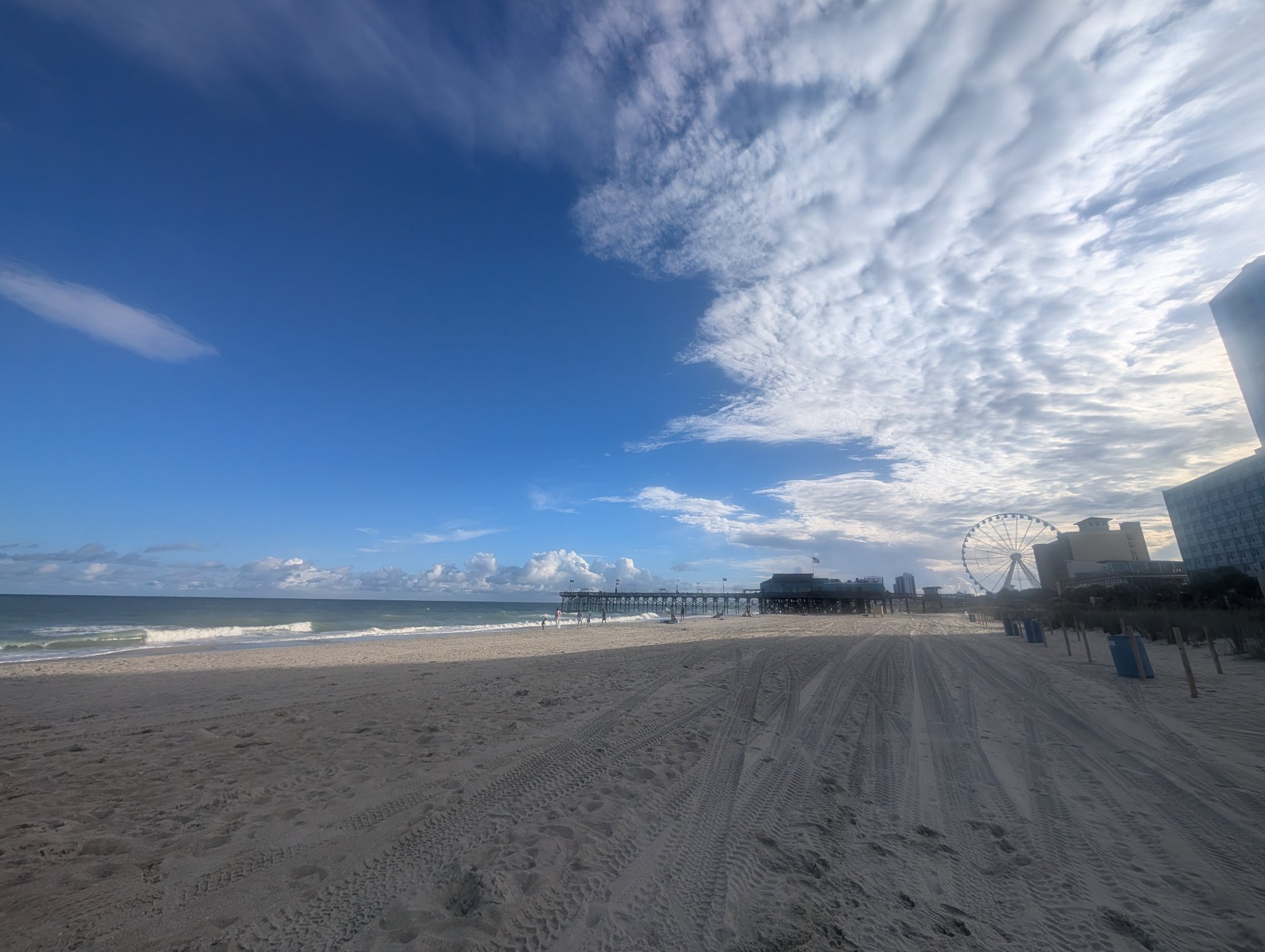 The Grand Strand, Myrtle Beach.
Everybody MBU talks to is planning one big beach week a year, and around here the same argument keeps coming up: Myrtle Beach or the Outer Banks? They're both Atlantic, both Carolina-adjacent, and both full of folks who swear theirs is the right one. So MBU is doing something new — a weekly series that stacks Myrtle Beach head-to-head against another beach town and tells it straight, pros and cons both ways. First up: the Outer Banks.
Here's the short version. Myrtle Beach is a beach town with a city attached — 60 miles of coastline, about fourteen communities, and something to do every night of the week. The Outer Banks is the beach, mostly by itself — 200 miles of barrier islands where the vacation is the house, the sand, and the people you brought with you. Neither one is wrong. They just aren't for the same trip.
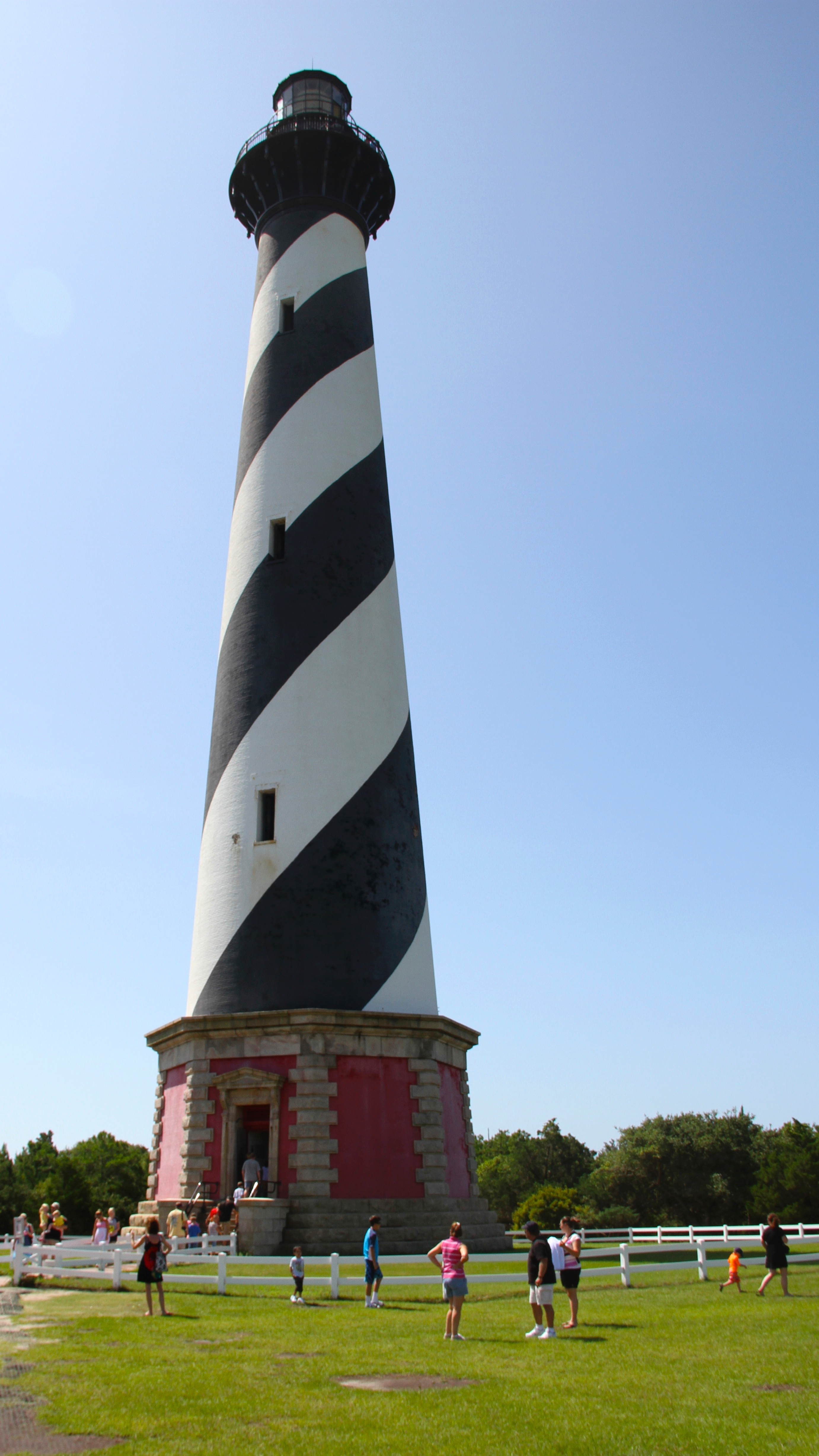 Photo: National Park Service, via Wikimedia Commons — https://commons.wikimedia.org/wiki/File:The_tallest_brick_lighthouse_in_the_United_States_of_America._(5d2dc787-1dd8-b71c-07a6-4aca98cabb8d).jpg
What a week costs
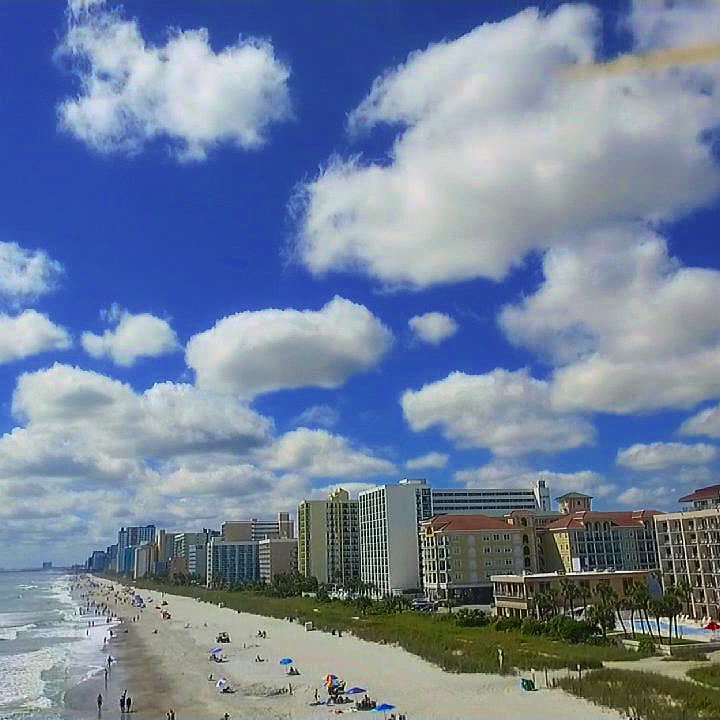 Hotels and condos line the Grand Strand.
This is where the two towns stop being the same kind of trip. In Myrtle, you book a hotel or a condo by the night, any length you want. The average hotel night runs about $188, and it swings hard by season — around $293 in July, closer to $127 in December. A week for two, all-in, lands around $2,996 on average.
The Outer Banks runs on the weekly rental house. A four-bedroom in peak summer averages $3,200 to $6,500 for the week, and the average across all sizes is about $2,591 a week. That math flips with your group. Ten people splitting a big house beats ten hotel rooms every time. Two people renting that same house get eaten alive.
Then there's parking, and MBU is going to give credit where it's due: the Outer Banks wins this one, flat out. Parking at every public beach access up there is free. The only exceptions are a permit to park in Carova and a permit to drive and park on the sand in the National Seashore.
Myrtle charges for city parking in season — the City of Myrtle Beach season runs March 1 through September 30, and North Myrtle Beach is $4 an hour, 9 AM to 5 PM, March 1 through October 31 (free before 9 and after 5, and free any time with a valid handicap placard in city lots). Plenty of hotels include parking, which softens it, but the Outer Banks is free and that deserves saying.
The beach itself
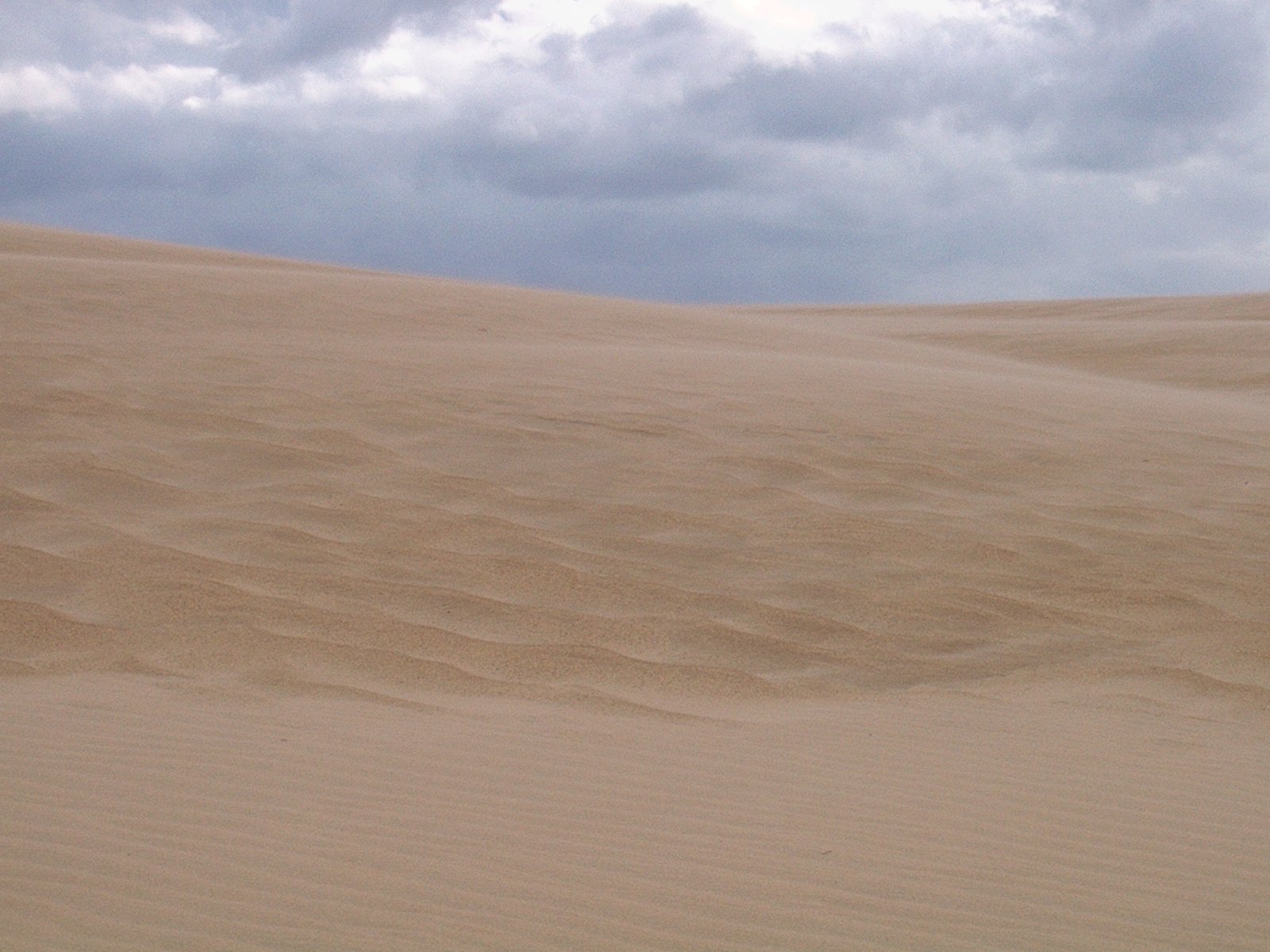 Photo: Pytheas, via Wikimedia Commons — https://commons.wikimedia.org/w/index.php?curid=49298854
If your idea of a beach is space and quiet, the Outer Banks wins that too, and it's not close. Cape Hatteras National Seashore protects nearly 70 miles of beach — America's first national seashore, set aside in 1953, about 30,000 acres of it. You can walk and walk and never see another towel.
What Myrtle wins on the sand is coverage. In the National Seashore, only four beaches have lifeguards — Coquina, Frisco, Ocracoke, and Old Lighthouse. The OBX towns staff their stands roughly Memorial Day through Labor Day, about 10 AM to 6 PM. Along the heart of the Grand Strand, guarded stands sit every few blocks all season. For families with little ones in the water, that matters.
The Outer Banks has one trick Myrtle will never have: you can drive on the beach. Kill Devil Hills and Nags Head allow permitted beach driving October 1 through April 30 — Nags Head charges $50 for residents and property owners, $100 for everyone else. There's no beach driving anywhere on the Grand Strand, full stop.
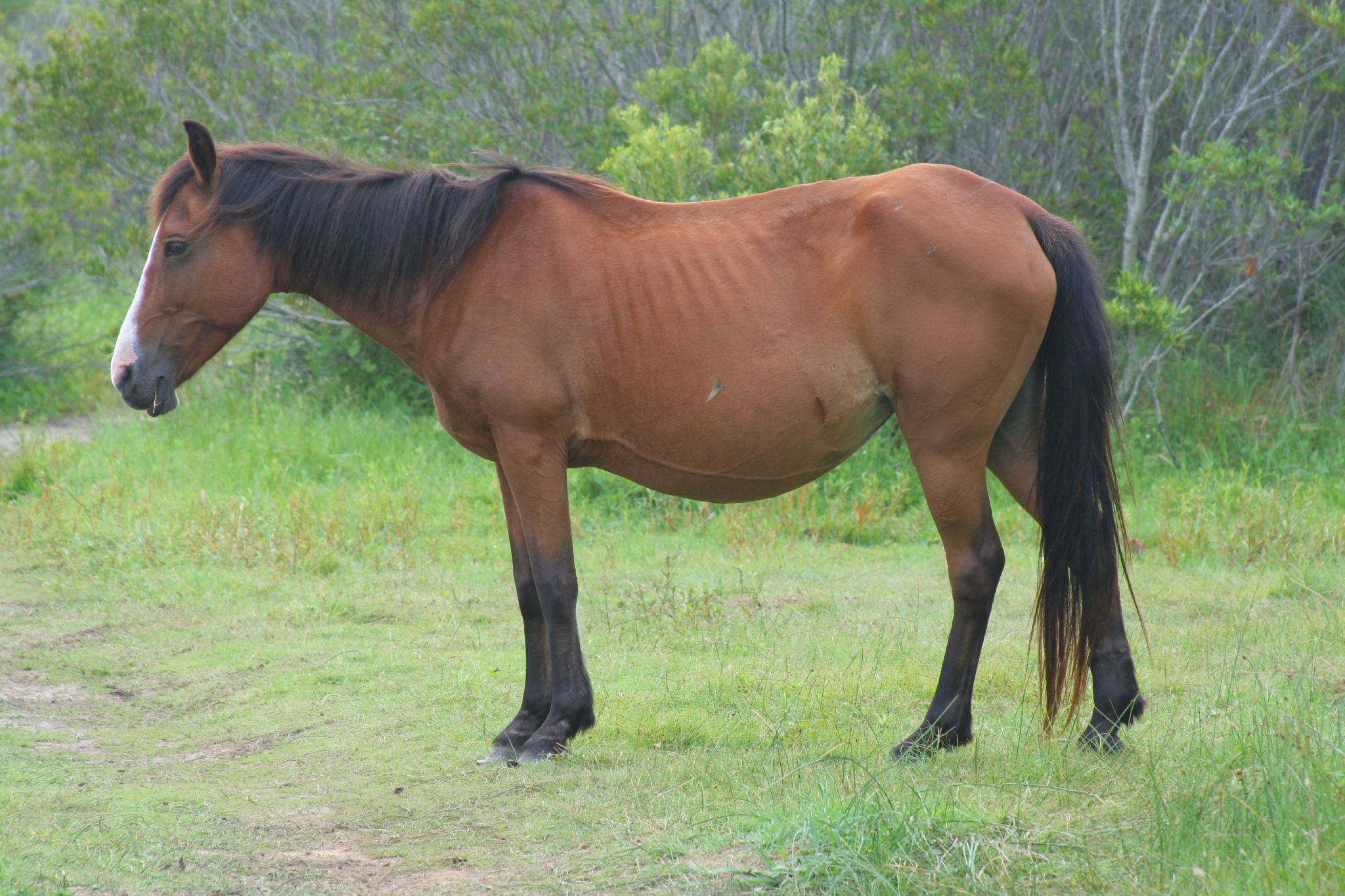 Photo: Tania Gail, via Wikimedia Commons — https://commons.wikimedia.org/wiki/File:Wild_Horses_of_the_Outer_Banks.jpg
The surf up there runs rougher, and the water can turn cold on a dime when a southwest wind pushes the warm surface water offshore. Myrtle's water generally feels calmer and warmer. And one honest note for the Outer Banks column: the ocean is taking back parts of Rodanthe, a few feet of shoreline a year, and houses have been lost to it. That's the price of a wild beach.
Boardwalk vs. villages
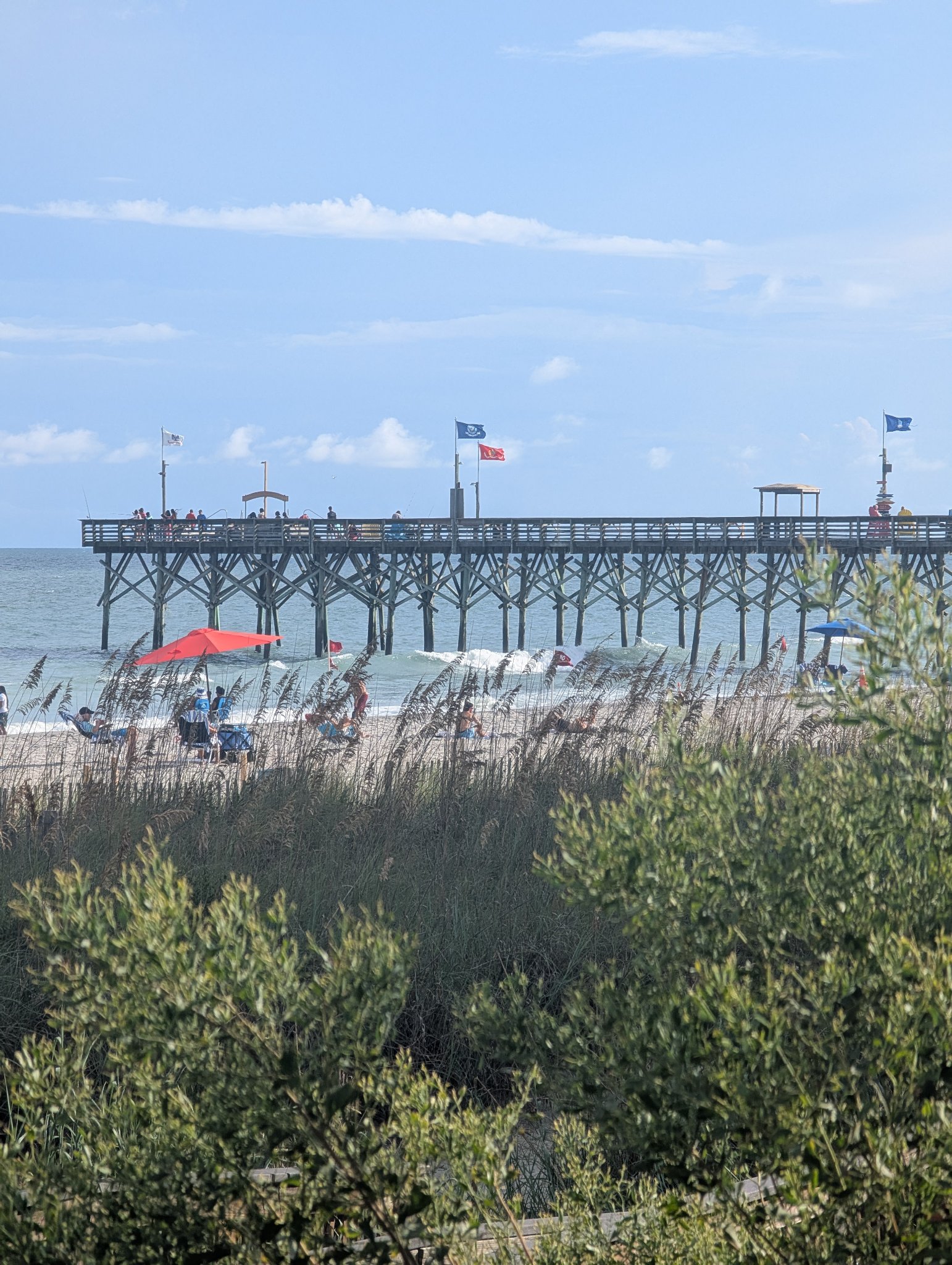 Fishing piers up and down the Strand.
Myrtle's oceanfront Boardwalk runs about 1.2 miles, the SkyWheel turns over it, and Broadway at the Beach sits a few minutes inland. After dinner, there's somewhere to go — a show, live music, a pier to walk.
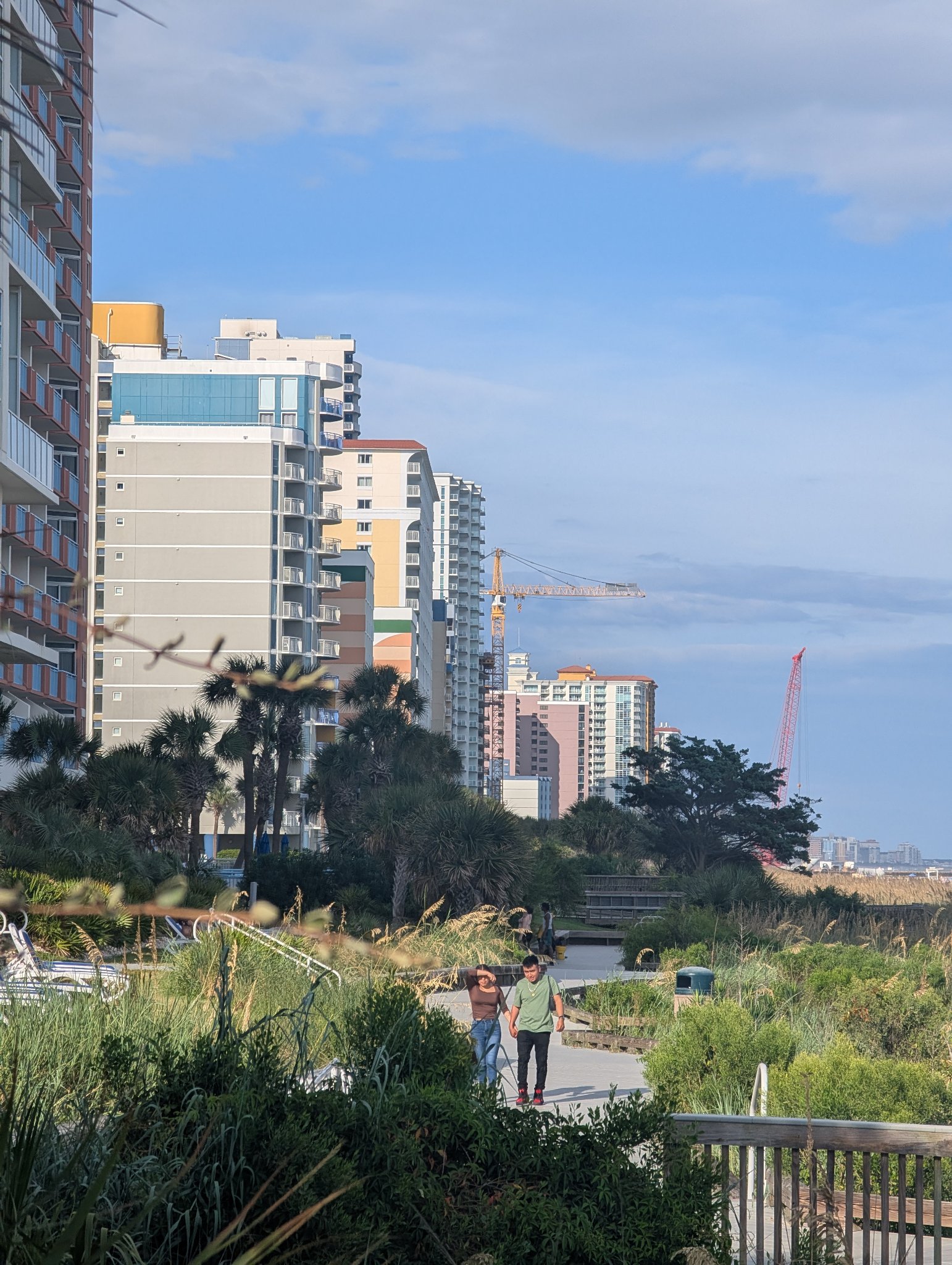 The Myrtle Beach Boardwalk area.
The Outer Banks doesn't have a boardwalk, and it doesn't want one. The scene is NC-12, seafood shacks, and fishing piers — Jennette's, Nags Head, Kitty Hawk, Avalon, the Outer Banks Pier. Duck has a small soundside boardwalk, and it's about as quiet as you'd expect.
Call it even, honestly. Myrtle wins "something to do after dinner." The Outer Banks wins "nobody's trying to sell you anything."
The food
Murrells Inlet calls itself the Seafood Capital of South Carolina, and it argues the case well — the MarshWalk alone is worth the drive down. Up and down the Strand, the sheer count of restaurants is the point: any cuisine, any hour, any budget.
The Outer Banks scene is smaller and mostly locally owned — seafood joints run by folks who live there, no big chains defining the strip. It doesn't match Myrtle on choice or late hours, but it has a character all its own. Even round.
Golf
Here's where the series gets lopsided, and MBU isn't going to pretend otherwise. The Grand Strand has 90-plus courses and more than three million rounds a year — the "Golf Capital of the World" nickname dates back to the late 1990s, when the Strand had around 120 courses. There's even a Guinness record for mini golf: 33 venues, 53-plus courses.
The Outer Banks has about nine courses total — four on the barrier islands, five on the nearby mainland. The good ones are genuinely good: Currituck Club, Kilmarlic, and Nags Head Golf Links all rank among North Carolina's top 50 courses you can play.
But let's be real: the Outer Banks has a nice golf day. Myrtle Beach has a golf economy.
Season and weather
The Outer Banks runs about a 16-week primary season, Memorial Day through Labor Day. Winter occupancy drops to 15 to 25 percent, and a lot of the islands close down. Myrtle keeps going — fall rallies, holiday events, snowbird season, restaurants open deep into the year. A beach trip in October still works here, and that's a real edge.
The other side of that coin is storms. The Outer Banks sits on narrow barrier islands with one road — NC-12 floods and overwashes, and evacuations happen more often up there. Myrtle gets its weather too, but it's not a single road in and out.
The drive
About, not exact — but this is how it shakes out:
- Charlotte: Myrtle about 3.5 to 4 hours, Outer Banks about 5.5 to 6. Myrtle wins.
- Raleigh: about 3 hours either way. A tie.
- Washington, D.C.: Myrtle about 6 hours, Outer Banks about 4. The Outer Banks wins.
- Atlanta: Myrtle about 5.5 hours, Outer Banks about 8. Myrtle wins.
- Columbus, Ohio: about 8 hours to Myrtle, about 7.5 to the Outer Banks. Near tie.
One thing the drive times don't show: the last 60 miles of the Outer Banks are two-lane NC-12, and on a Saturday changeover day that road is a slow parade. Locals call it part of the ritual. First-timers call it something else.
Nightlife vs. family time
After dark, Myrtle wins outright — shows and theaters, live music every night, two bike rallies a year, bars that stay open late. The Outer Banks runs on family-house culture: cookouts, crab pots, early nights. The nightlife is thin by design, and the people who love the Outer Banks would have it no other way.
The verdict
Pick the Outer Banks if you're renting one big house with your whole crew, you want space on the sand more than stuff to do, free beach parking matters to you, and quiet is the whole point of the trip.
Pick Myrtle Beach if you're booking a long weekend instead of a full week, you want golf and shows and nightlife in the mix, you're driving in from the Carolinas or Atlanta, or you want a beach trip that still works in October.
MBU's take: the Outer Banks is the better escape. Myrtle Beach is the better vacation. Which one you want depends on the week you're trying to have.
Team Myrtle or Team OBX? That's the debate, and MBU wants to hear it — drop your pick in the comments.