October on the Strand: What Changes When the Lifeguards Leave
What changes on the Grand Strand in October when lifeguards leave, turtle season winds down, fishing turns over, and beach rules loosen town by town.
Category: guide | Published: 2026-10-12
October on the Strand: What Changes When the Lifeguards Leave
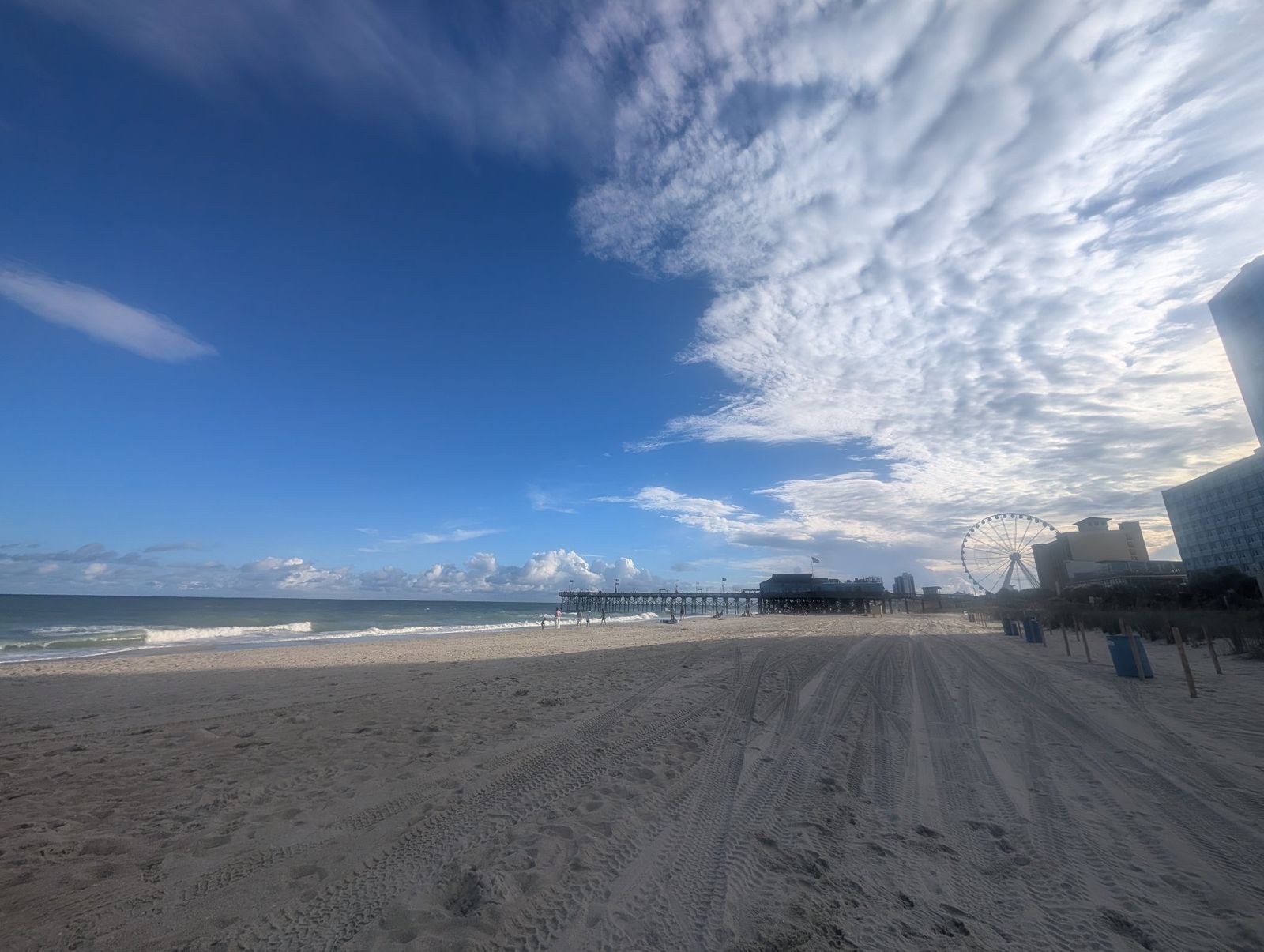
The beach does not close in October. It changes hands.
The summer crowds load up and head home, the rental umbrellas come off the sand, and the Grand Strand settles into the month locals wait on all year. But an October beach is not just a quieter July beach. The guard stands empty out on a schedule most visitors never see. The water starts a slow slide. The last turtle nests of the year sit in the sand on a countdown. The fish trade places. And right around Labor Day, half the rulebook quietly flips — dogs, tents, parking, all of it.
Here is what actually changes on the Strand when October rolls in.
The Stands Empty Out
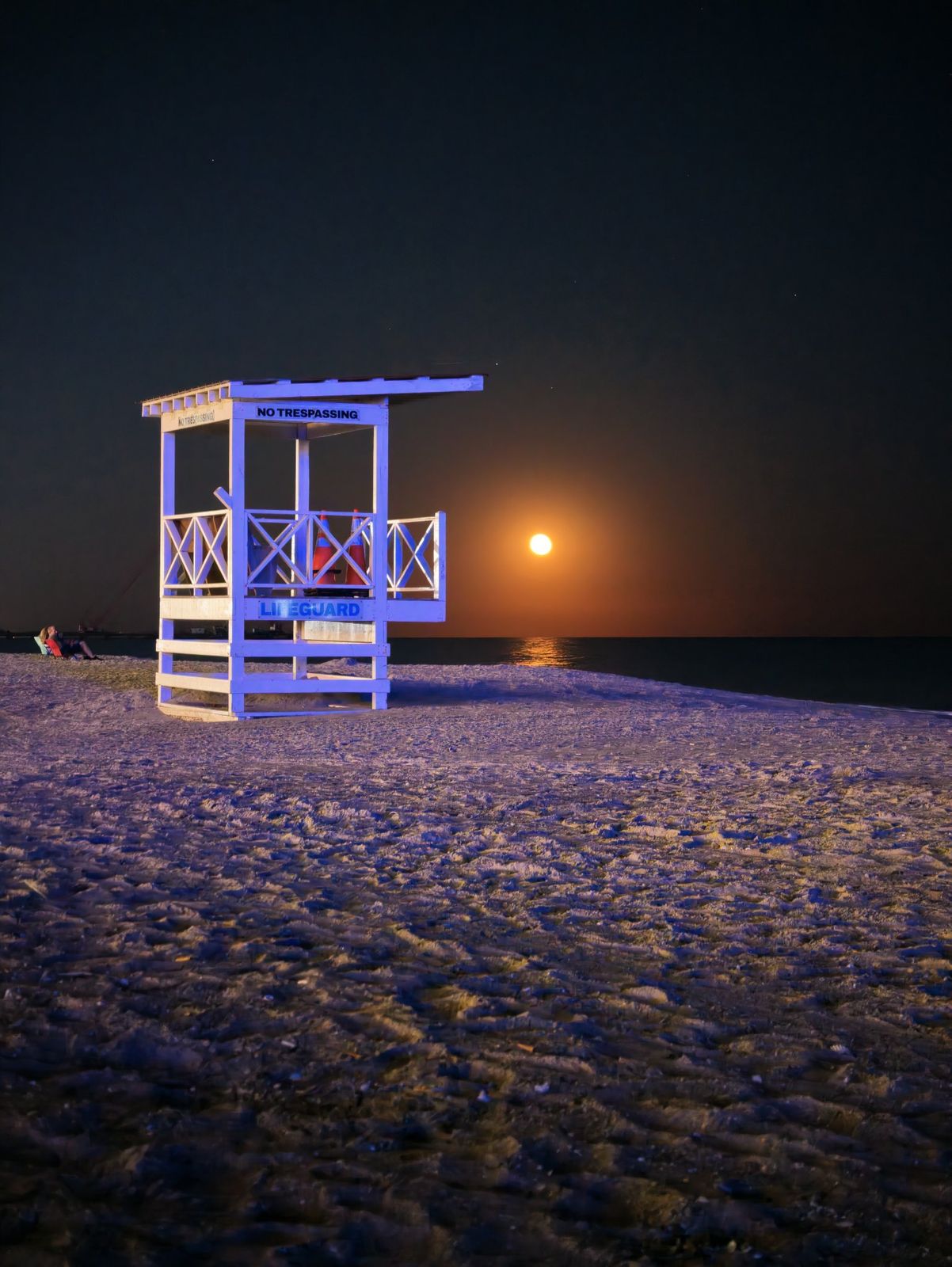
Every town up and down the Strand runs its guard season on its own clock, and by October, nearly all of those clocks have run out.
In the City of Myrtle Beach, the surf rescue season runs from mid-April through September 30, so October opens with the stands already empty. Horry County, whose beaches include Garden City, only requires lifeguards stationed along its beach from May 15 through September 15. Surfside Beach stations contract lifeguards along its oceanfront during the season, and that season winds down with the summer, too.
North Myrtle Beach is the holdout. Its Ocean Rescue season runs April 1 through October 31 — the longest on the Strand — though the roster thins out in the fall as the college and summer guards head back to school. And Pawleys Island does not change in October at all, because it never has lifeguards. The town says it plain: everybody enters the ocean at their own risk, and life rings hang at several beach accesses for whoever needs one.
"Swim at your own risk" deserves a plain translation. It means no flags flying over the water, no trained eyes scanning it, and no whistle coming if the current takes hold. The rescue plan is a 911 call. And rip currents do not retire when the guards do. The National Weather Service office in Wilmington was still issuing beach hazards statements for the Horry and Georgetown coast in late September and into October of this year, warning about longshore and rip currents. October also sits inside hurricane season, which runs through November 30 — a storm hundreds of miles offshore can pump up the surf and stack rip currents along the Strand for days without a drop of rain falling here. The water in October is beautiful. It is also unwatched. Plan accordingly.
The Water Slides, Slowly
The good news: the ocean gives up its summer warmth slow. Most years, the surf off the Grand Strand starts October in the upper 70s, slides through the mid-70s mid-month, and reaches Halloween in the low 70s. Early October swimming is genuinely pleasant — warm water, warm sand, and nobody's beach chair within fifty feet. By the end of the month, most folks are wading more than swimming, and the full-immersion crowd has thinned to surfers, fishermen, and the hard-headed. The slide is gradual, not a cliff, and that is exactly why October fools people. A beach that feels like summer at noon can still bite by late afternoon.
Turtle Season's Last Act
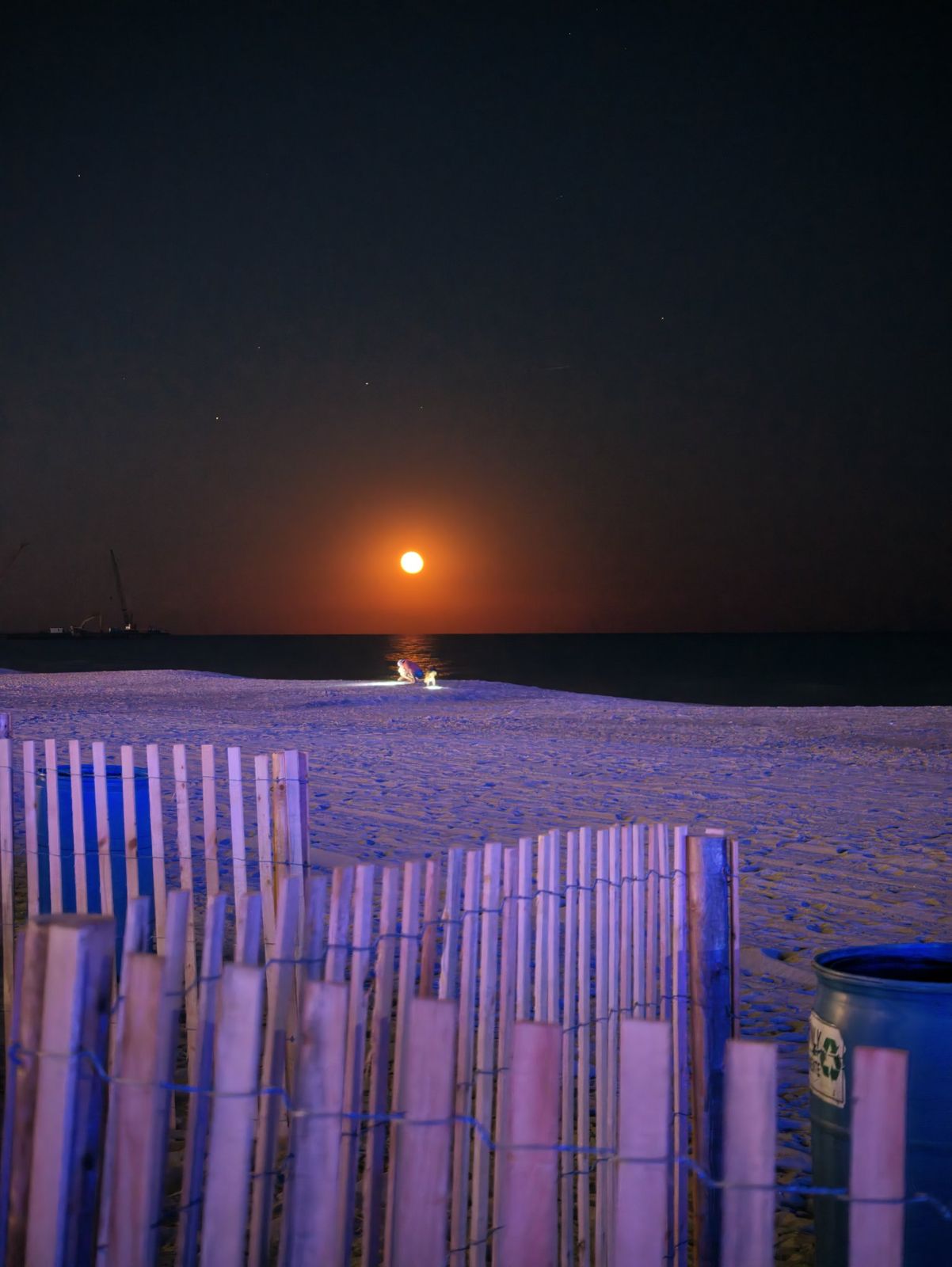
South Carolina's sea turtle season officially runs May 1 through October 31, which means October is the finale. Hatching starts around July and runs through the end of October, and the math explains why: a loggerhead nest holds around 120 eggs and sits in the sand for roughly 60 days before it hatches. A nest laid in late August is an October nest, whether anybody is watching or not.
That is what the stakes in the sand mean. When MBU's readers spot a little fenced-off patch of dune with signage on it, that is a marked nest, found and recorded by volunteer patrols working under South Carolina DNR permits. Locally, SCUTE — South Carolina United Turtle Enthusiasts — walks the Horry and Georgetown County beaches at dawn looking for the flipper tracks that give a nest away. Every sea turtle species that nests here is protected under the Endangered Species Act, so the rule is simple: look from a distance, never touch, and never dig.
October beachgoers can still help the last hatchlings of the year. Beachfront lights stay off or shielded at night, because artificial light can pull a hatchling inland instead of out to sea. Holes get filled in before dark. Beach gear comes off the sand at night instead of staying out as an obstacle course. One late nest, one dark beach, one clear run to the water — that is the whole ballgame for the last turtles of the season.
The Fish Trade Places
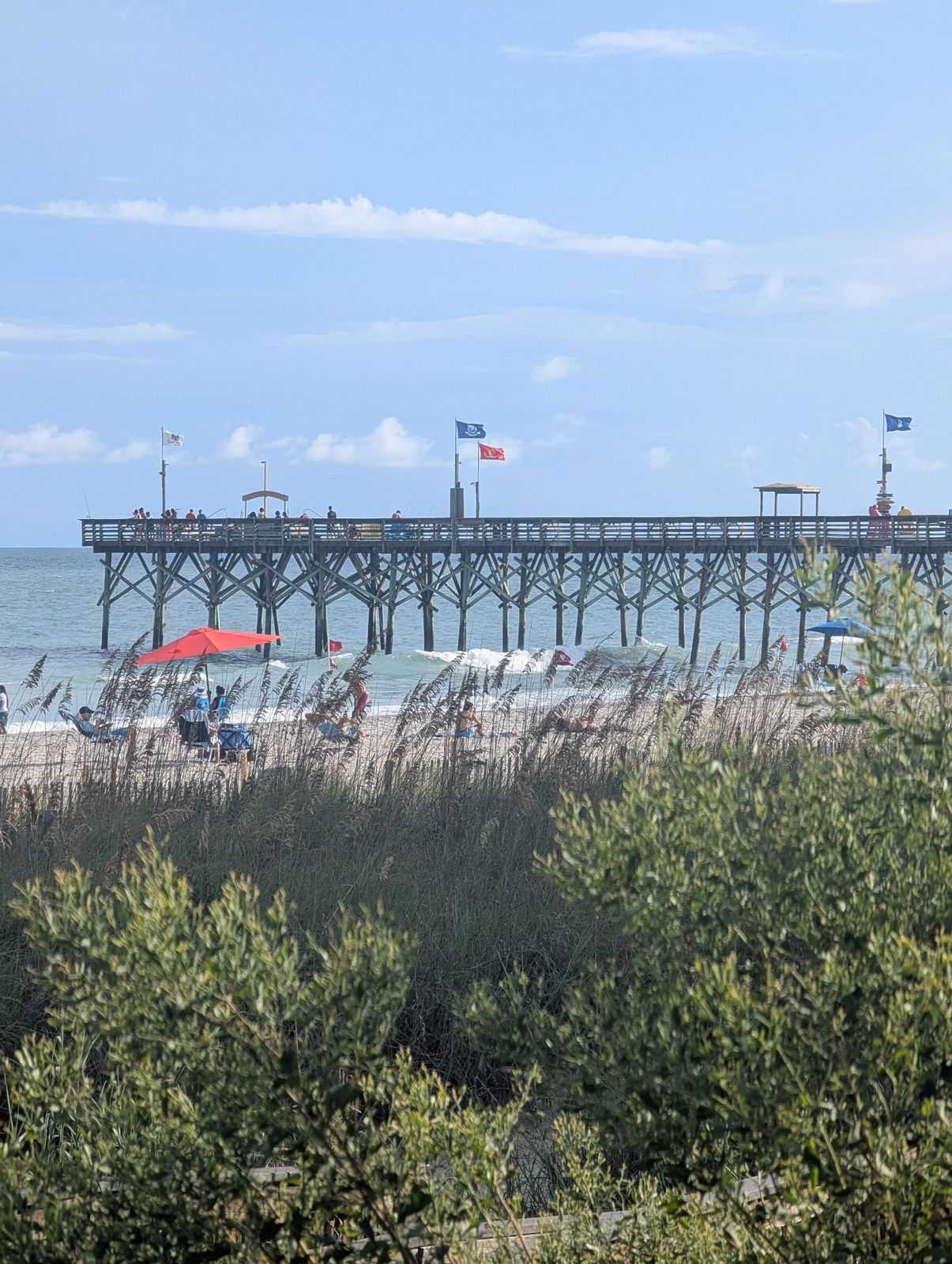
Fall is when the fishing calendar turns over, and plenty of local anglers will tell MBU it is the best season of the year. The mullet run pushes schools of bait down the coast, and everything with teeth follows. Big bull red drum gather around the inlets and off the piers after their late-summer spawn, feeding hard ahead of winter. Speckled trout bite better and better as the water cools. The Spanish mackerel that lit up the summer start to fade as those temperatures drop.
One standing reminder before anybody keeps a fish: check the current South Carolina DNR saltwater size and creel limits first. The limits change, and "it was legal last year" is not a defense. The current rules ride free on the DNR website and in the annual fishing guide.
The Rulebook Flips
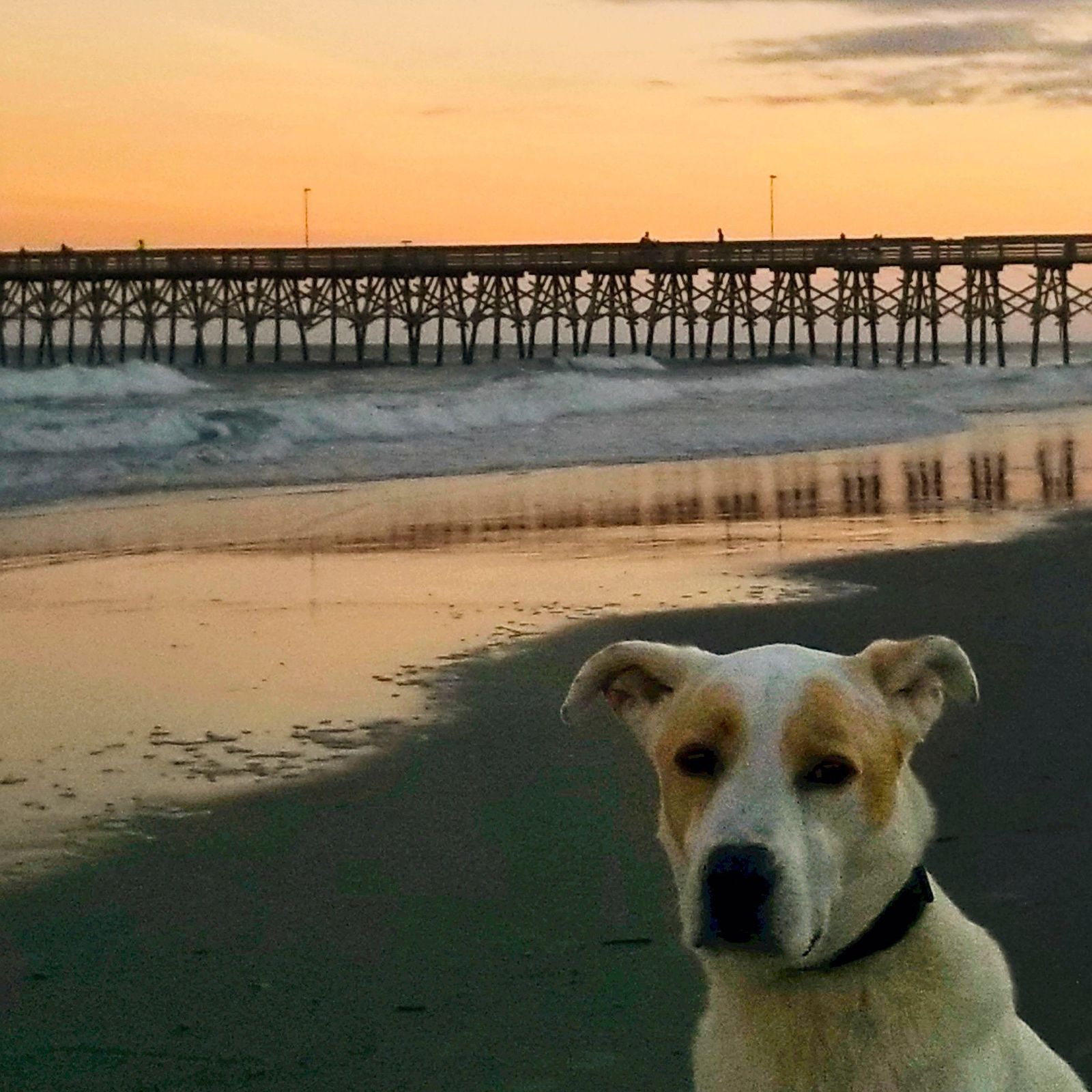
Here is the part October visitors actually feel. Once Labor Day passes, the Strand's strictest beach rules loosen up, town by town.
Dogs get their beach back. In Myrtle Beach, dogs are welcome on the sand at any hour from the day after Labor Day through April 30 — leash of seven feet or shorter, cleanup required, same as always — and dogs and bikes get the run of the Boardwalk again, too. Surfside Beach and the Horry County beaches, Garden City included, lift their 10 a.m. to 5 p.m. dog bans after Labor Day as well. North Myrtle Beach's daytime dog ban runs May 15 through September 15, so October dogs are legal there at any hour, leash on. Down on Pawleys Island, the leash hours — 8 a.m. to 8 p.m. — run May 1 through September 30.
Tents come back out. Myrtle Beach's umbrellas-only season ends after Labor Day; tents and shading devices up to 12-by-12 are welcome again, set at least 10 feet behind the umbrella line. North Myrtle Beach's tent ban runs May 15 through September 15, so fall beach days up there can have real shade again, too.
Downtown parking goes free. As of October 1, parking is free at city-metered spaces in Myrtle Beach from Sixth Avenue South to 21st Avenue North, and that free season runs through the end of February. Meters outside that stretch stay paid year-round, so read the sign before walking away from the car.
The Local Take
None of this makes October a lesser beach month. It makes it a different one — warmer water than May, emptier sand than June, and rules written for the folks who live here the other eleven months. Just respect the trade: the Strand in October hands everybody more freedom and less supervision at the same time. Swim like nobody is watching, because nobody is. Keep the lights low for the last turtles. Let the dog run the good hours. That is October on the Strand, and MBU would not trade it for any week in July.